News & Insights
MENU


May 29, 2026
As Indonesia’s media landscape fragments across platforms, languages, and a 17,000-island archipelago, the brands cutting through share one thing: they understand that trust here operates on a different frequency.

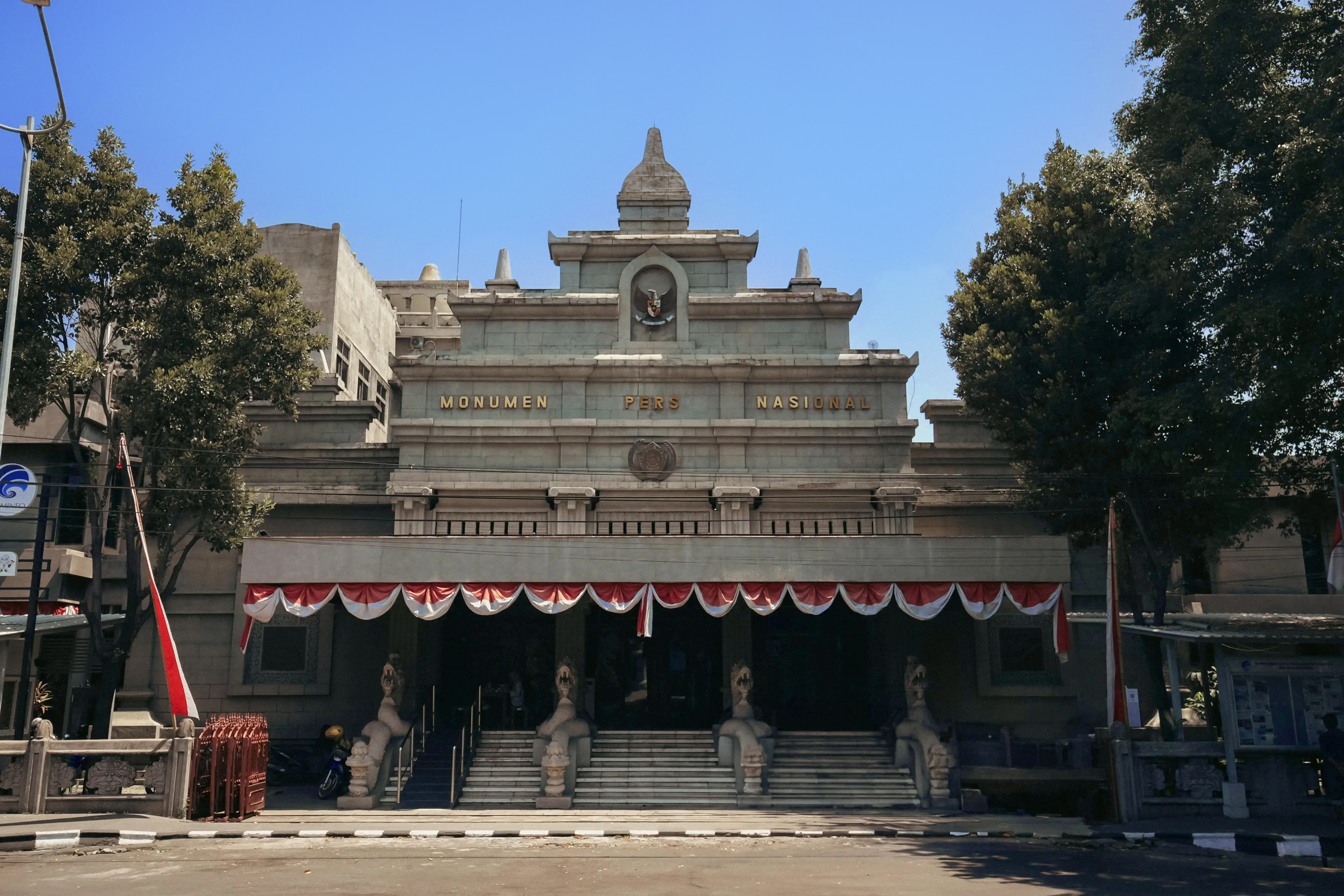
Indonesia is one of the most digitally engaged countries on the planet. With 285 million people, over 80% internet penetration, and the world’s second-largest TikTok user base, the numbers look extraordinary. But working across this market makes one thing clear: scale and reach are not the same thing as trust.
The way the media works in Indonesia resists easy generalisation. Journalists here are operating under pressure that is not unlike what their colleagues in Malaysia or Vietnam are facing: shrinking newsrooms, faster editorial cycles, and the constant pressure of digital-first publishing. But Indonesia adds uniquely complex layers. The landscape is fragmented by regional languages and local media ecosystems, the news cycle is heavily influenced by the government agenda, and most importantly, the public has become one of the most misinformation-exposed audiences in the world.
In that environment, the brands building real reputations are not necessarily those with the biggest distribution lists. They are the ones who understand how trust moves through this particular culture.
When looking at Indonesia’s digital statistics, it is tempting to conclude that media strategy here is primarily a social media problem. It is not, or rather, it is not only that.
Yes, TikTok shapes public opinion here at a speed that has no equivalent in most other markets. WhatsApp groups, not newsrooms or social feeds, are where a significant portion of the Indonesian public first encounters information about brands, crises, and current events. But the journalists, editors, and influential commentators who ultimately shape institutional reputation still operate through more traditional channels. Getting that relationship right matters.
I have consistently found that pitches land best with Indonesian journalists when they connect clearly to the national agenda. The Prabowo administration has brought renewed focus on economic sovereignty, infrastructure, and the Nusantara capital project. Coverage authentically tied to those broader national narratives cuts through far more reliably than announcements that could have been sent from any market.
Indonesia’s official language is Bahasa Indonesia, but calling this a monolingual market would be an oversimplification. Across Java, Sumatra, Sulawesi, Kalimantan, and beyond, regional identities, local-language media ecosystems, and deeply specific cultural references shape how stories are received and repeated.
What I have found is that the most effective pitches do not just translate, they localise at a level that reflects a genuine understanding of the audience. A business story that resonates in Jakarta’s financial press would land differently in Surabaya’s regional media. An ESG narrative tailored for English-language investor publications requires a completely different approach for a Bahasa-language consumer outlet.
Treating these distinctions as a core strategy, rather than a mere afterthought, is what separates durable media coverage from a one-off placement.
Indonesia is, by several measures, one of the most challenging markets in the world for managing information. Social media engagement is high, content moves rapidly through WhatsApp and TikTok, and media literacy remains limited in some communities. These elements combined create an environment where a narrative is extraordinarily hard to correct once it enters circulation.
For brands and their communications teams, this is not an abstract risk. Regulatory pressure is increasing as Indonesia’s Ministry of Communications now holds brands to strict timelines for responding to misinformation. A 48-hour holding statement is no longer sufficient, and the market now demands a rapid, credible public response.
In practical terms, brands must move beyond a static crisis plan and build an active, crisis-ready infrastructure. That means:
There is a principle embedded in Indonesian culture, gotong royong, which is the idea of cooperation and collective responsibility. This concept maps almost directly onto how the most effective media relationships work here.
When a journalist consistently returns a call, gives honest feedback on a pitch, or sends a heads-up about a breaking story, it isn't because of a beautiful press kit. It is because the relationship was built over time through consistent, genuine engagement that is not purely transactional.
Cultivating this relationship requires a few core habits:
The brands that navigate Indonesia’s media landscape well share one defining trait: they invest deeply in understanding the market. They look beyond just the outlets and the journalists to grasp the cultural rhythms, the political context, and how trust is genuinely forged in these communities.
That investment is patient and often invisible in the short term. Over time, however, it shows up in relationships that get calls returned, in coverage that is accurate and contextual rather than merely placed, and in the kind of institutional reputation that holds when things get difficult.
In one of the most complex media environments in Southeast Asia, that depth of understanding is not a competitive advantage. It is the absolute baseline.
See how PR works in Indonesia →
—
About Ellerton & Co: Your Bridge Across Southeast Asia
Ellerton & Co. is one of Southeast Asia's leading independent public relations and integrated communications agencies. Headquartered in Singapore with teams across Vietnam, the Philippines, Indonesia, Malaysia, Thailand, India, Japan, and Hong Kong, the agency helps brands build visibility and authority across Greater Southeast Asia's most dynamic markets.
Get in touch: growth@ellerton.sg
Stay ahead with analysis and communications insights from teams working across SEA, India, and Europe.
Stay informed with Ellerton & Co.’s latest updates and expert insights at the intersection of PR and business.